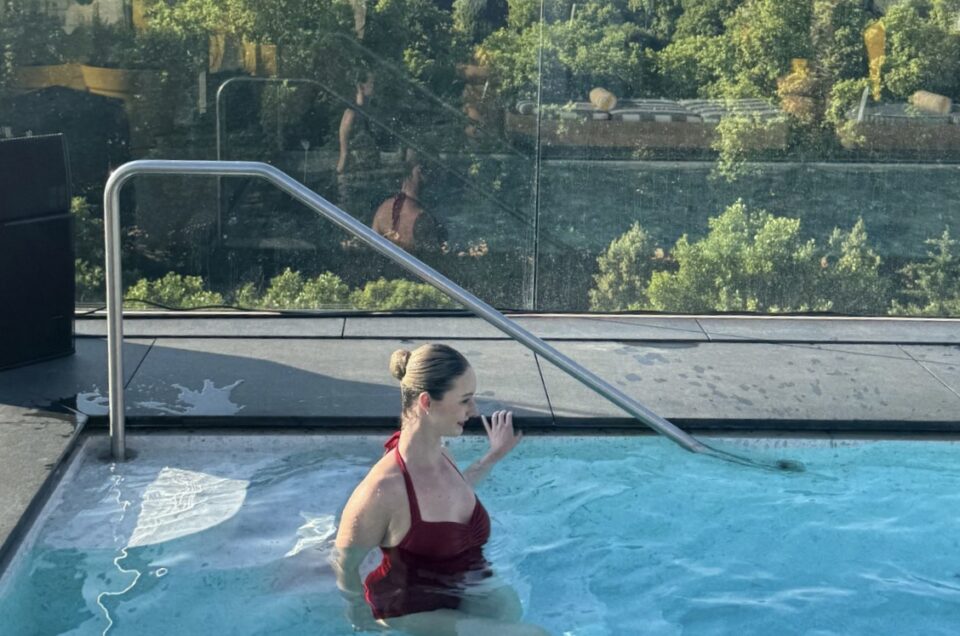
How Aquabatix Director Adele Carlsen Is Transforming Swimming into Movie Screen Magic
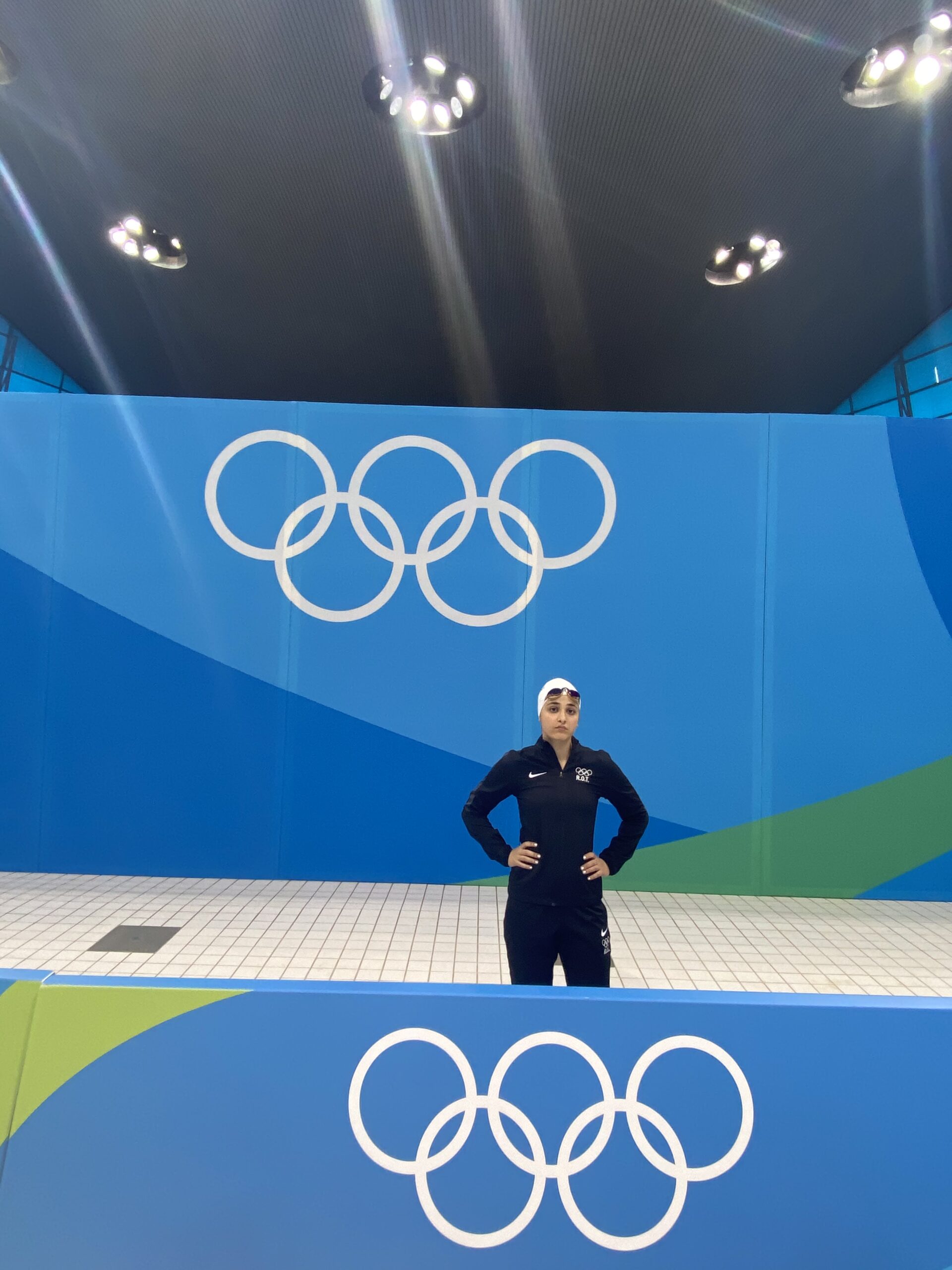
Adele Carlsen is a swimming coach for actors. Yes, there is such a job. From winning a Commonwealth Games medal and being a finalist at the World Championships, to becoming an elite performance coach and working with the TeamGB synchronized swimming (now known as artistic swimming) team through two Olympic cycles, Aquabatix Co-Director Adele Carlsen is bringing the extraordinary world of this creative sport back to Hollywood, helping actors, performers and production teams discover what it takes to move, perform and tell stories in water.
What does it take to perform effortlessly underwater, swim like a competitive swimmer, hold an elegant position in the water or make a complex aquatic sequence look completely natural on screen? Behind the magic is often a combination of athletic ability, technical precision, confidence and hours of dedicated training.
Few people understand this better than Adele Carlsen.
A former competitive artistic swimmer, Commonwealth Games medallist, world championship finalist and British champion, Adele has built a career that bridges elite sport, performance coaching and the entertainment industry. Drawing on years of experience as an athlete, elite coach and High Performance Manager, she has taken the discipline and artistry of competitive swimming into a very different arena: film, television, fashion and live entertainment. Adele’s journey demonstrates that the skills developed at the highest level of sport can translate far beyond competition, and that training like a performance athlete can be just as valuable on a film set as it is in an Olympic pool.
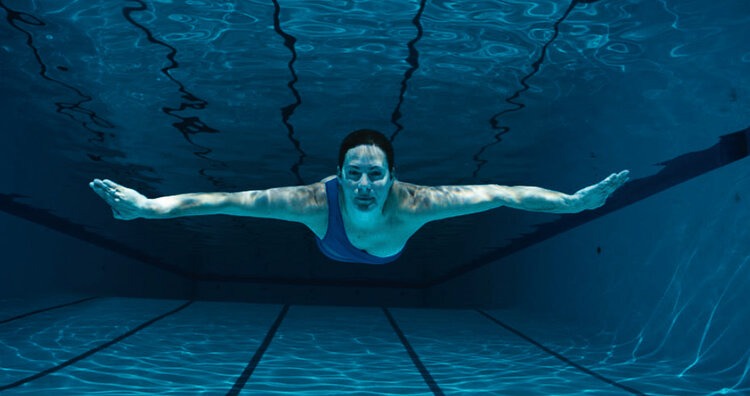
From competitive swimmer to Commonwealth Games medallist
Adele’s journey began at Rushmoor Synchronised Swimming Club, following in the footsteps of her older sister after her dad’s fascination with Hollywood musicals and the ultimate movie mermaid Esther Williams. What started as an introduction to the sport developed into a competitive career that would take her to national titles, European and World Championships and ultimately to the Commonwealth Games and Olympic trials. Reaching that level requires far more than the ability to swim beautifully. Artistic swimming demands exceptional strength, breath control, flexibility, coordination, musicality and the capacity to execute complex movements under extreme pressure. Most of all it requires discipline as one of the most trained sports in the Olympics. For Adele, those years of competitive training established the foundations of a career built around movement, performance and technical excellence. Her experience also gave her an appreciation of the less visible side of sporting success: preparation, repetition, resilience and the discipline required to perform when it matters most.
From athlete to coach: A career built on performance
After retiring from competitive sport following the 1998 Commonwealth Games when Team GB made it clear they would not send the British artistic swimmers to Sydney 2000, even though they would have qualified easily via IOC rules, Adele continued to work at the highest levels of artistic swimming. After moving into coaching at Rushmoor, leading younger athletes to win several national titles, and later coaching at the 2002 and 2006 Commonwealth 2006 Games, in 2007 Adele started her role in performance development and management at the newly funded High Performance Centre in the sport, working with athletes and staff towards the 2008 and 2012 Olympic Games. Adele says “we lived and breathed high performance sport 24/7 for several years. Our system and culture was recommended by UK Sport as one of the best in the country, up there with British cycling”. This breadth of experience helped Adele evolve her understanding of high performance from every angle, not only what athletes need physically, but also how teams prepare, how skills are developed and how individuals can be supported to perform under pressure. That knowledge would become particularly valuable as her career expanded beyond traditional competitive sport.
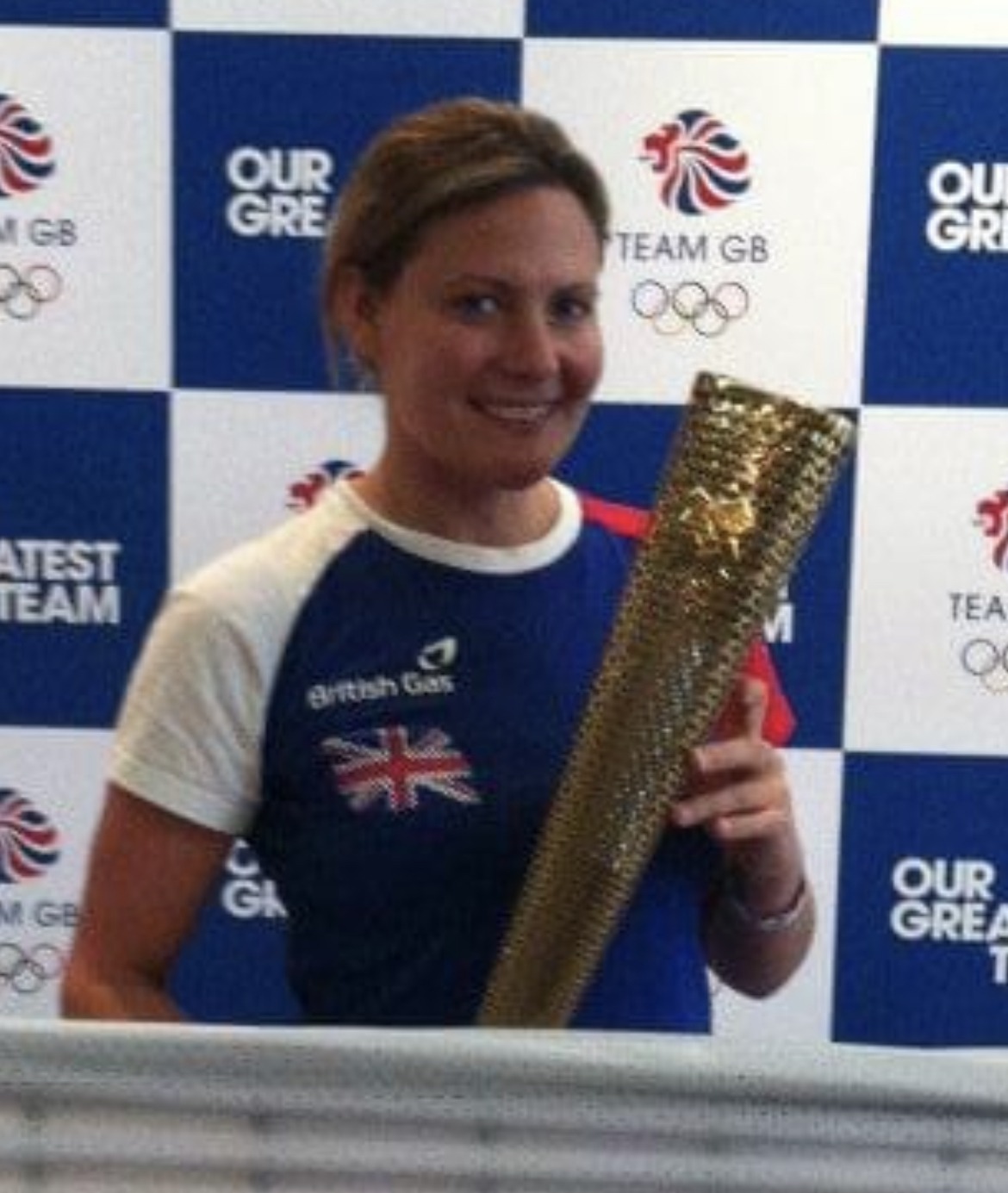
Bringing artistic swimming to Hollywood
In 2006, Adele co-founded Aquabatix with fellow artistic swimmer Katie Fried. “We both started synchro at 8 years old together, winning national titles together and competing for Great Britian through the years” Adele mentions. Their ambition with Aquabatix was to bring the beauty and athleticism of artistic swimming to wider audiences through entertainment, live performance and creative productions. The idea recognised something important; artistic swimming is not simply a competitive discipline. It is also a powerful visual art form, combining athletic movement, choreography, music, costume and storytelling. Historically, swimming and spectacle have shared a close relationship. Hollywood’s famous aquatic productions helped popularise synchronised swimming in the 1940s and 1950s, demonstrating how water could become a stage for performance. Adele, Katie and their team built on that tradition fusing modern day Olympic athleticism with the Busby Berkely style of kalediscope formations and movement, creating opportunities for artistic swimming to feature as contemporary entertainment.
Aquabatix went on to appear on Britain’s Got Talent in 2012, contribute to a Stella McCartney fashion show, work on the Elton John biopic Rocketman and appear in several live events across the world. One particularly memorable project was Adele’s music video for I Drink Wine. The Aquabatix team contributed from the early creative stages, helping to develop the storyboard and bring the artistic swimming visual concept to life.
These projects required a different kind of performance expertise from competitive sport. Rather than focusing solely on scores, rankings or medals, the objective was to create compelling visual moments that served a story, a brand or an artistic vision, in a minimum amount of time. Adele brings up that “in the Olympics, you have two years to prep those routines as part of a four year cycle of training, where as in Aquabatix, sometimes we get just a day on site to learn and prep routines. The athletic principles, however, remained remarkably similar: precision, control, timing, teamwork and the ability to repeat demanding movements consistently.
Teaching actors to swim, perform and move underwater
For actors, working in water can present a unique set of challenges. A movement that appears simple on land can feel entirely different when buoyancy, resistance, breath control and restricted visibility come into play. Underwater performance will involve swimming confidently and energy efficiently to the area of the tank, pool or open water to film and be able to spend hours treading water without tiring, maintaining or hitting a particular body position or transitions, coordinating movement with a camera, following choreography or conveying an emotion while submerged without looking like they are holding their breath. When swimming technique is required, it will be obvious when an actor in onscreen and isn’t a trained swimmer.
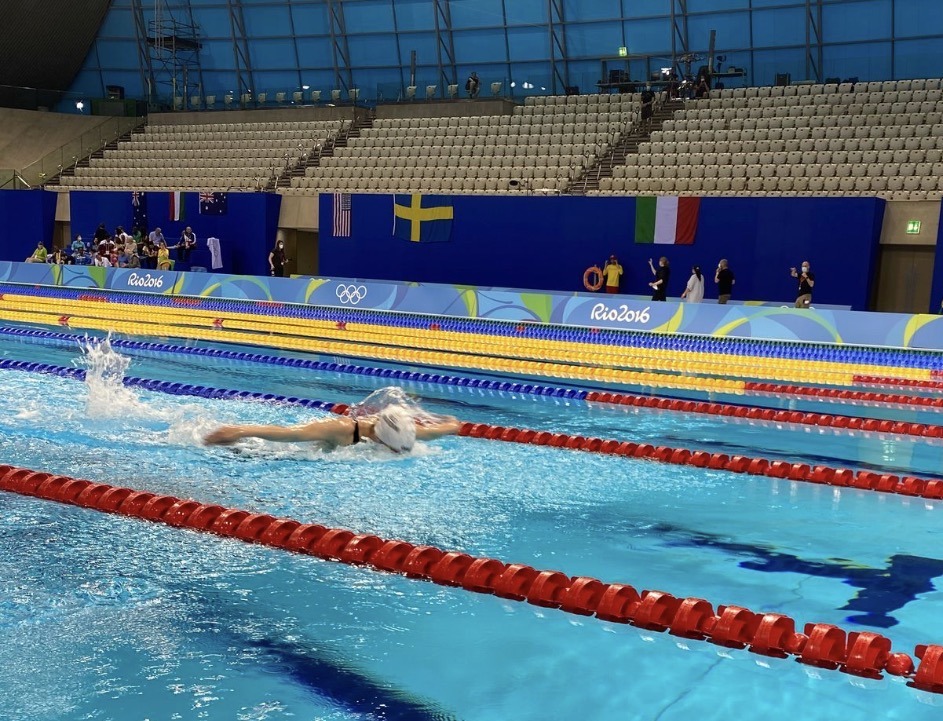
If the actor is portraying a competitive swimmer, production has to be able to do close ups showing correct technique along with the speed through water, What takes a competitive speed swimmer years to perfect, the actor may only have two to three months to train. This is where the experience of an elite artistic swimming professional becomes especially valuable. Adele says “my skills not only as a qualified swimming instructor and as someone who has raced competitively in the pool, but also as an artistic swimmer is invaluable. Through my synchro skills too, I have a feel of water that is even more developed than a swimmer, the breathwork and drills we do for that, plus how we move underwater, learning bearings under there, along with the body conditioning knowledge and i understand all about choreography.
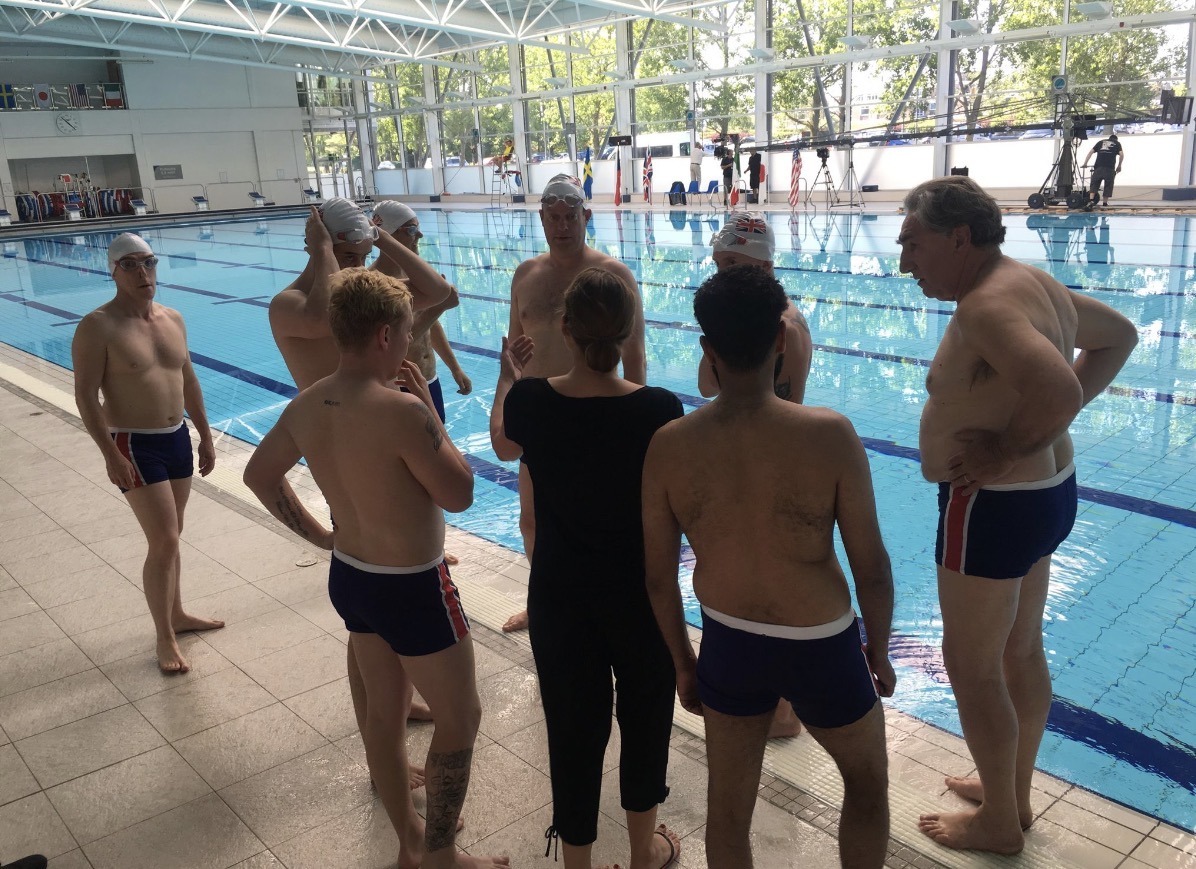
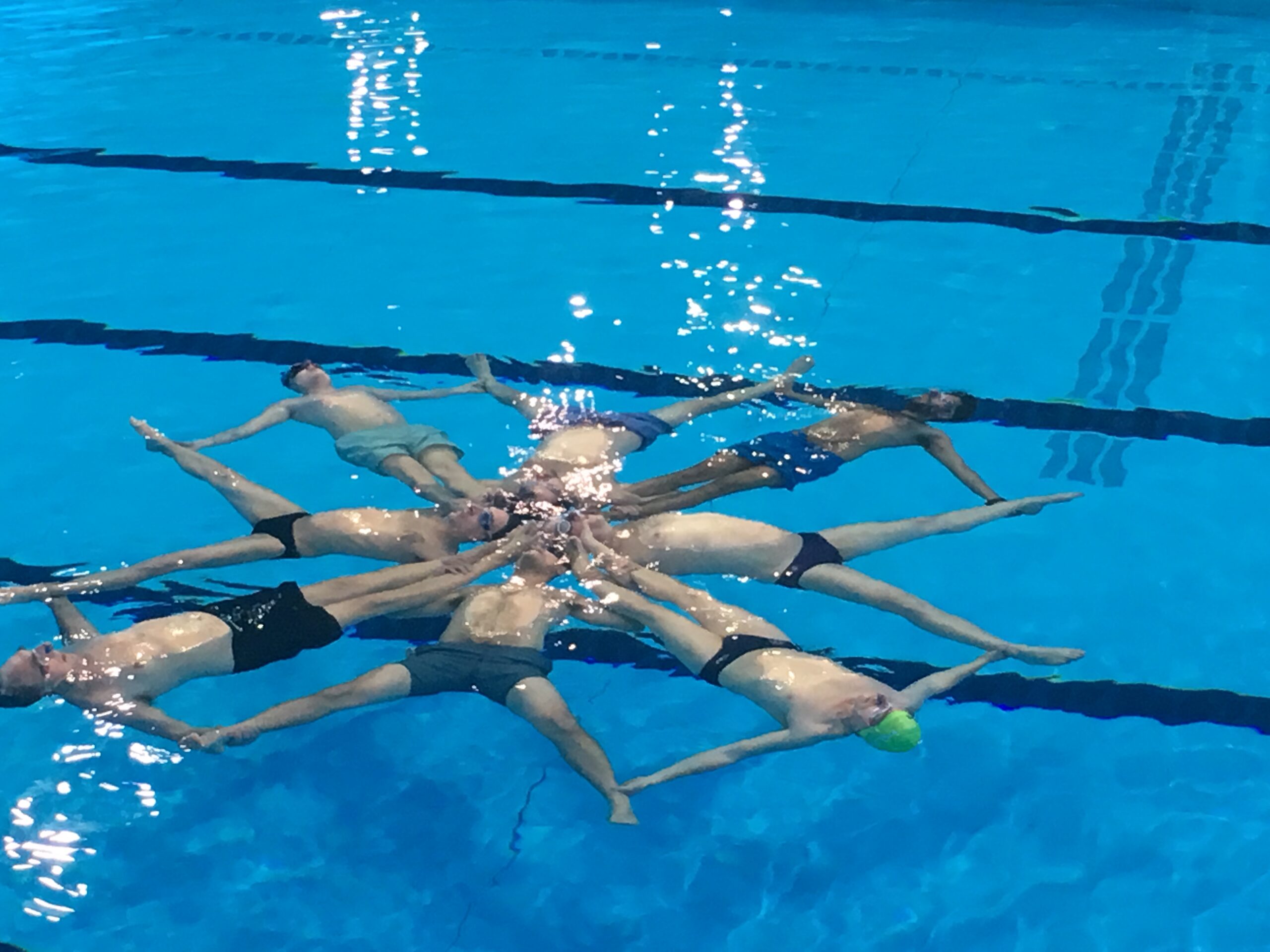
I tread water using eggbeater which is far more efficient that traditional treading water, and I can spend hours in water with the actor, swimming with them if required and knowing and developing what cheats we can use in filming, which is still the actor doing the work, to achieve the desired shot. Plus through Aquabatix I have a vast global network of aquatic athletes so can also supply body doubles if required. I have worked on several films, including The Swimmers which involved me consulting on the look and technical aspects of an Olympic swimming competition and doing a two month boot camp training to get a beginner swimmer actor to look like an Olympic fly swimmer. I worked alongside an S&C coach who could achieve the physical look of a butterfly swimmer on land, whilst i focused on teaching technique. Plus the movie Swimming With Men, which was more focused around synchronised swimming, teaching basic moves and choreography to six male actors such as Adeel Aktar, Rob Brydon and Daniel Mays. Thankfully they had to look like beginners. Plus we had one female actor Charlotte Riley, who had to perform synchronised swimming in a team of professional athletes too.
Depending on the scene, preparation may include:
- Swimming technique: Developing efficient movement, body alignment and confidence in the water.
- Underwater skills: Learning controlled submersion, streamlined movement, spatial awareness and safe, supervised breath-control techniques.
- Artistic movement: Using posture, extension, fluidity and choreography to create visually expressive performances.
- Camera awareness: Understanding how movement, angles and timing affect what an audience sees on screen.
- Performance consistency: Repeating a sequence accurately so that it can be captured across multiple takes.
- Consult on competitive requirements for aquatics if the film demands that exact knowledge.
The goal is not to turn every actor into an elite swimmer, some roles may be that they need to swim effortlessly to a position in open water without tiring, or they may even need to show drowning. It is to identify the skills a particular role requires and develop them progressively, helping the performer feel more prepared, controlled and confident in whatever role it is they require in water.
When the preparation works, the audience sees the story rather than the effort behind it.
“Certainly when it comes to being technically correct, I would hate for a competitive swimmer to notice when an actor is not looking like a trained swimmer when required to do so, even I hate seeing that on screen, it is something you can tell so quickly. I want to walk away with comments such as the one I received from an Olympic swimmer after they watched Netflix’s The Swimmers. They said it was the best they had seen Olympic level swimming portrayed on screen”.
How to train like a performance athlete
One of the most valuable lessons Adele’s sporting background brings to the entertainment industry is that exceptional performance rarely happens by accident. Elite athletes do not rely on talent alone. They develop repeatable systems that help them prepare physically, refine technique, manage fatigue and deliver under pressure. These principles can be adapted for actors, dancers, stunt performers and anyone who needs to perform at their best. Training like a performance athlete is about more than working harder. It is about training with purpose.
- Build a strong physical foundation
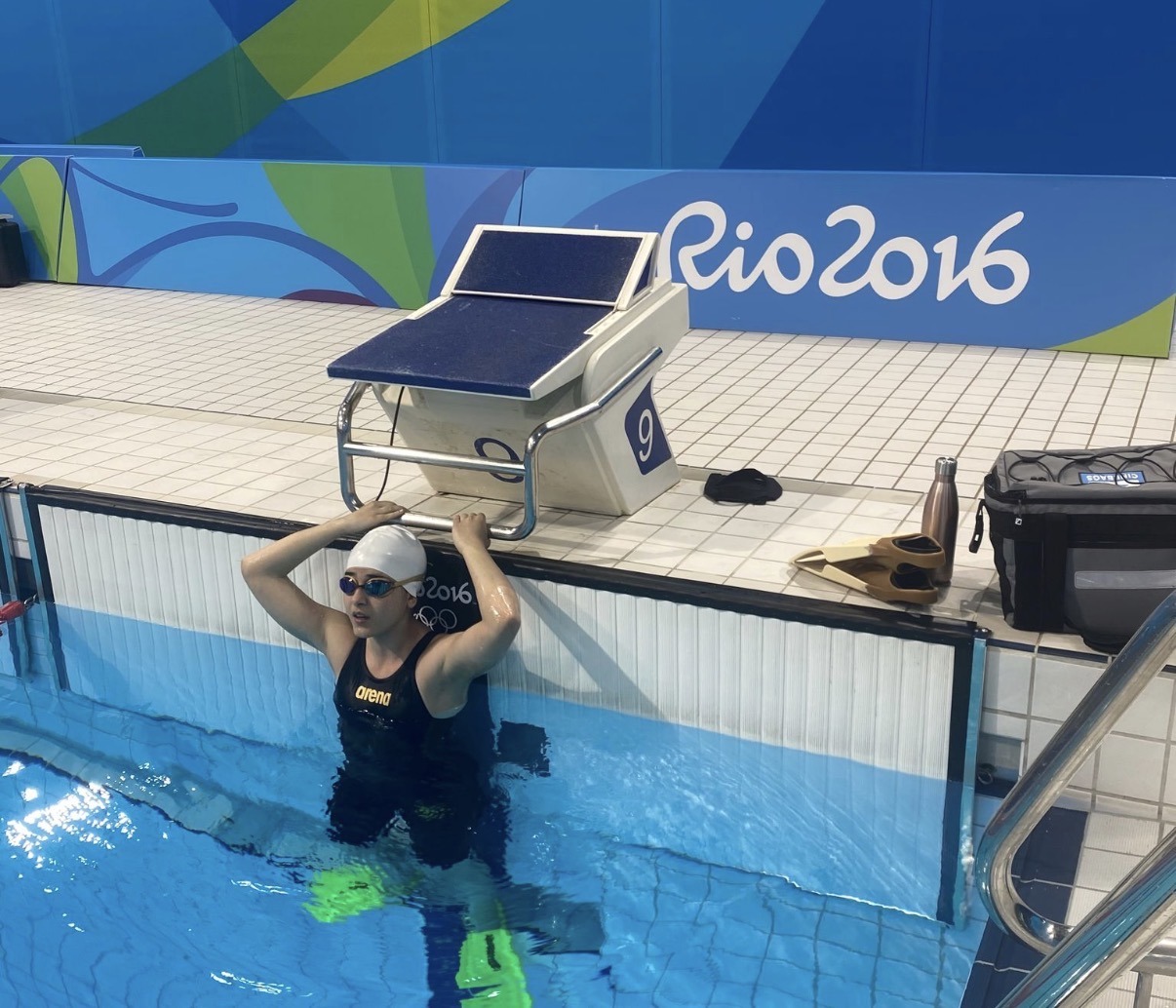
Performance begins with the body. Strength, mobility, coordination and cardiovascular fitness all contribute to the ability to move efficiently and confidently. For aquatic performers, strength helps maintain body position, while mobility supports fluid movement and expressive lines. Core stability is particularly important for controlling the body in water and fire proofing shoulders to protect them from overuse injuries. A well-rounded programme might combine strength training with weights, mobility exercises, swimming technique and movement preparation, with the balance adjusted to the individual’s experience and goals. Breath hold will be important for many roles in water too, which must be taught and developed safely. Freedivers are experts when it comes to slowing heart rates down, and training to go deep, but for roles where heart rates will be high but breath hold still essential, artistic swimmers have numerous drills and techniques to help train those physical demands.
- Prioritise technique over repetition alone
Elite athletes understand that repeating a movement is only useful when the quality of that movement is maintained. Rather than rushing through a sequence, break it down into manageable components. Focus on alignment, timing, coordination and control before gradually increasing complexity.For an actor preparing for an underwater scene, this could mean practising a basic swimming movement before progressing to a choreographed sequence that incorporates a camera mark or a specific dramatic action. Small technical improvements can make a significant difference to the final performance.
- Develop body awareness and control
Artistic swimming requires athletes to understand where their bodies are in space, even when they cannot rely on the usual visual cues available on land. Proprioception is essential and this awareness is valuable for performers who need to create precise shapes, maintain a particular position or move smoothly through a sequence. The objective is to make movement intentional rather than accidental and be able to control the water rather than let it control you.
- Train for the demands of the performance
A competitive athlete prepares specifically for the demands of their event. An actor should approach a physically challenging role in the same way. Preparation should reflect what the scene actually requires: swimming continuously, moving gracefully underwater, entering or exiting the water, performing choreography or repeating a short sequence for several takes. Training can then be structured around those requirements, with realistic progression and appropriate recovery working with fitness trainers on land, physios and nutritionists to achieve the actor’s goal for that production. This is particularly important when filming. A short scene may need to be repeated several times, meaning performers must manage their energy while maintaining consistent technique.
- Practise performing under pressure
Training and performance are not always the same experience. Cameras, lighting, production schedules, other performers and the pressure to get a shot can all affect concentration. Elite sport teaches the value of preparation, routines and the ability to focus on a task when the stakes feel high. Performers can benefit from rehearsing in stages, becoming familiar with the environment, understanding their cues and building confidence through structured practice. The aim is not to eliminate every challenge or practice for every single curveball. It is to develop the skills and preparation needed to respond to challenges effectively.
The connection between elite sport and screen performance
At first glance, the Olympic Games and a Hollywood production may seem worlds apart. One is built around competition and measurable results; the other is shaped by storytelling, creativity and the demands of a production. Yet both require people to perform highly technical tasks in front of an audience.
In artistic swimming, every movement contributes to the overall impression. Timing, musical interpretation, precision and teamwork all matter. In film, the same qualities can help an underwater sequence feel believable, elegant and emotionally engaging. The key difference is the objective. An elite swimmer trains to execute a routine to the highest possible competitive standard. An actor or performer trains to serve the character, scene and story.
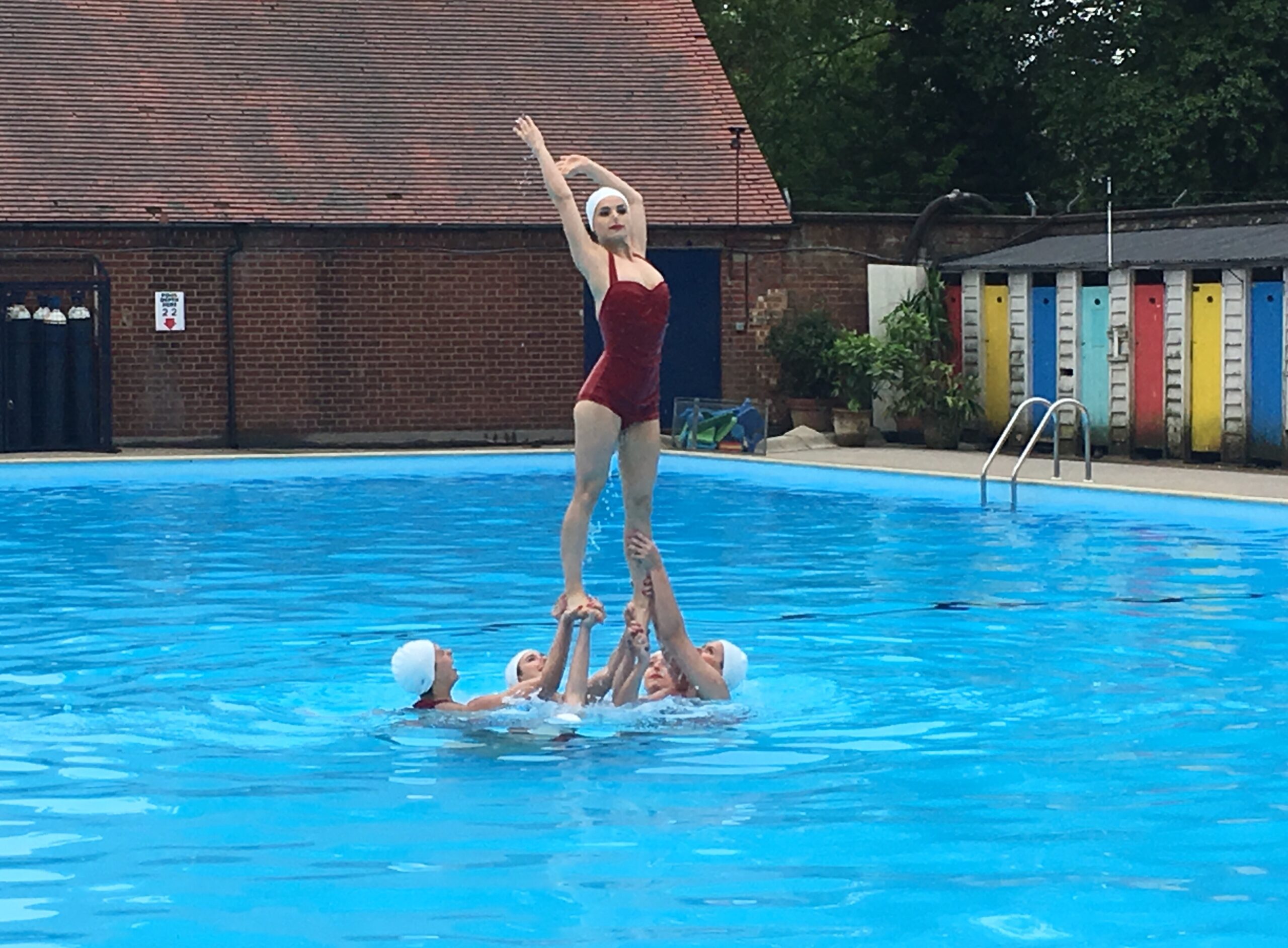
Adele’s career sits at this intersection. “Adele Carlsen; swimming coach to actors is something I never even thought about as a career when I was at school. To me film was Hollywood in LA, but now film production is possibly bigger in the UK than there, and we have better filming tanks too such as Pinewood U Stage and brilliant talented underwater camera crews”. Adele adds “ I have worked with a lot of actors, and many have a similar mindset to high performance athletes. They have a goal to achieve and want to train to be the best they can be in that skill to make sure they can be as believable to the audience as possible in that role. They will be super hard on themselves as athletes are and it is my role to teach, push them to their potential, challenge them but also make sure they don’t burn out and get injured which would affect the production”.
From medals to movie magic Adele Carlsen’s story is about more than moving from competitive sport into Hollywood. It is about recognising the possibilities that exist when athletic expertise meets creativity. For actors learning to swim or performers preparing for underwater scenes and production teams looking to create compelling aquatic sequences, the lessons of elite sport remain relevant.
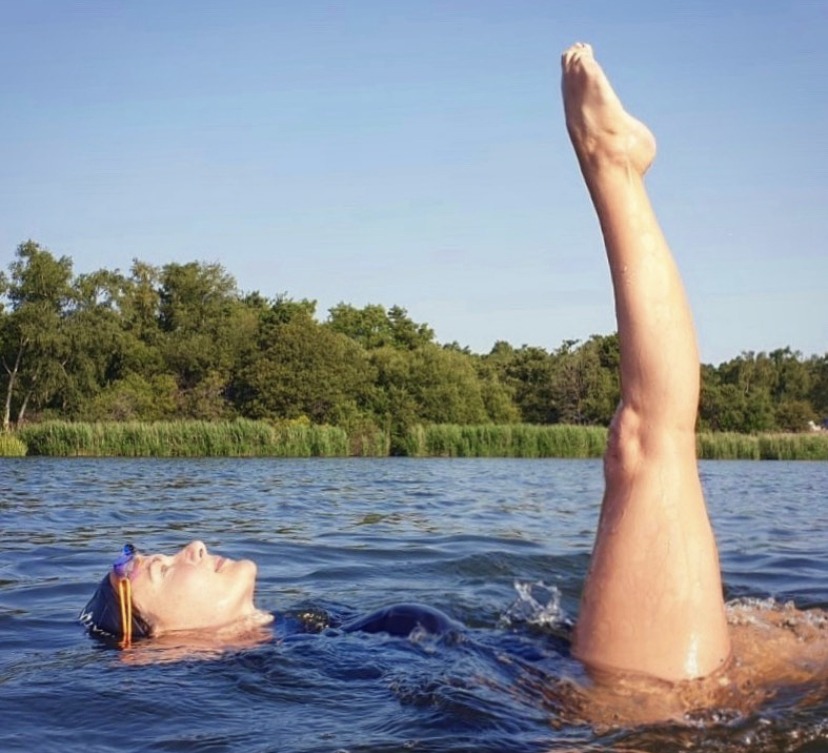
Prepare with purpose. Develop technique before chasing complexity. Build confidence progressively. Respect recovery. And understand that the most effortless-looking performances are often supported by hours of careful preparation.
Because whether the goal is to win a medal or create a moment of cinematic magic, great performance begins long before anyone presses record.